Home / Identify
Is this a striped bark scorpion?
How to tell what you found, and whether it is the one that matters
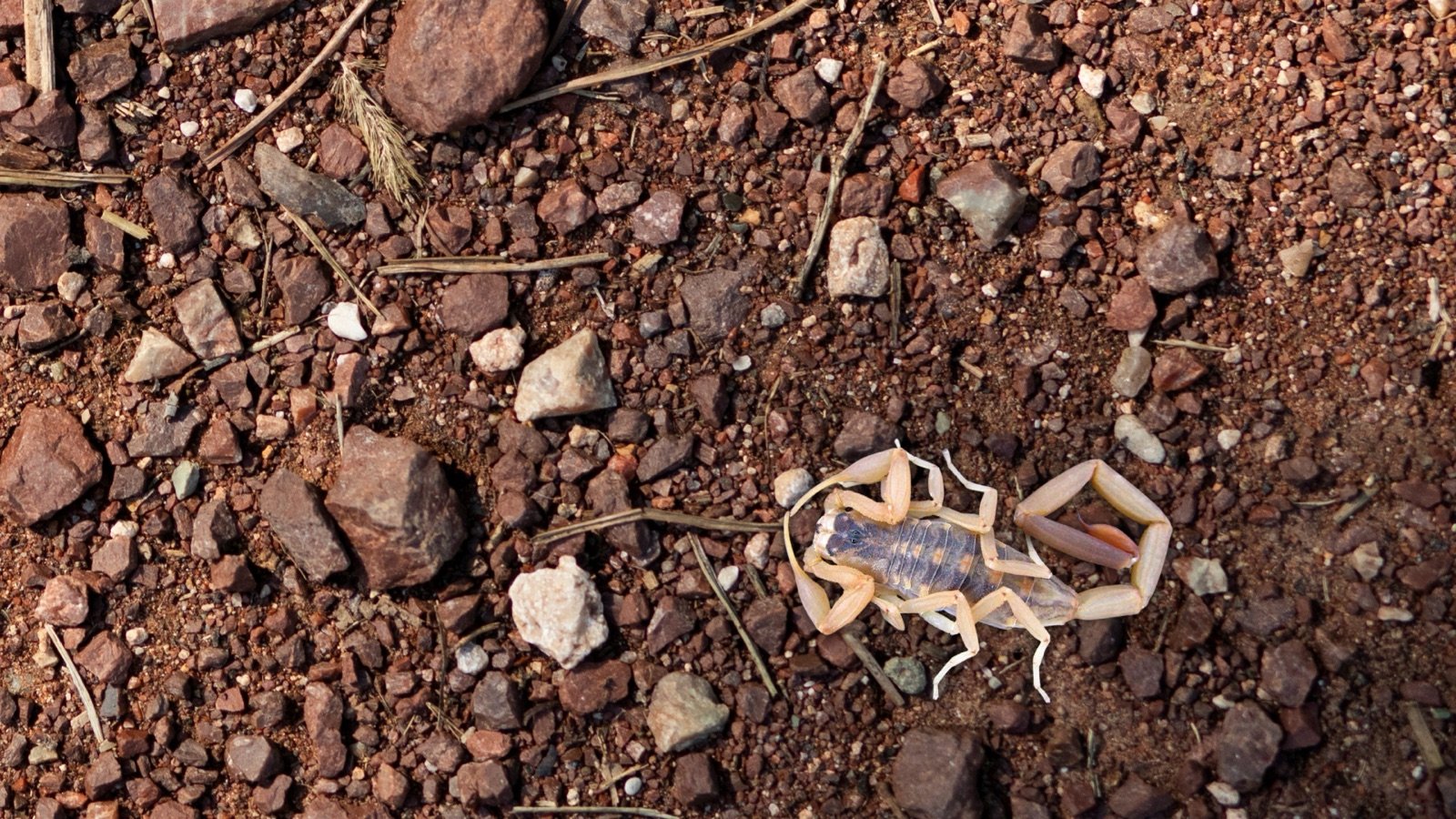
If you just found a scorpion indoors or on your property across Texas or the south-central states, it is almost certainly the striped bark scorpion. This section helps you confirm that, rule out its genuinely dangerous cousin, and tell a true scorpion from the harmless creatures people mistake for one.
A pale, yellowish scorpion with two dark stripes down its back and a dark triangle on its head is a striped bark scorpion. Its sting hurts but is rarely dangerous to a healthy adult.
What a scorpion actually is
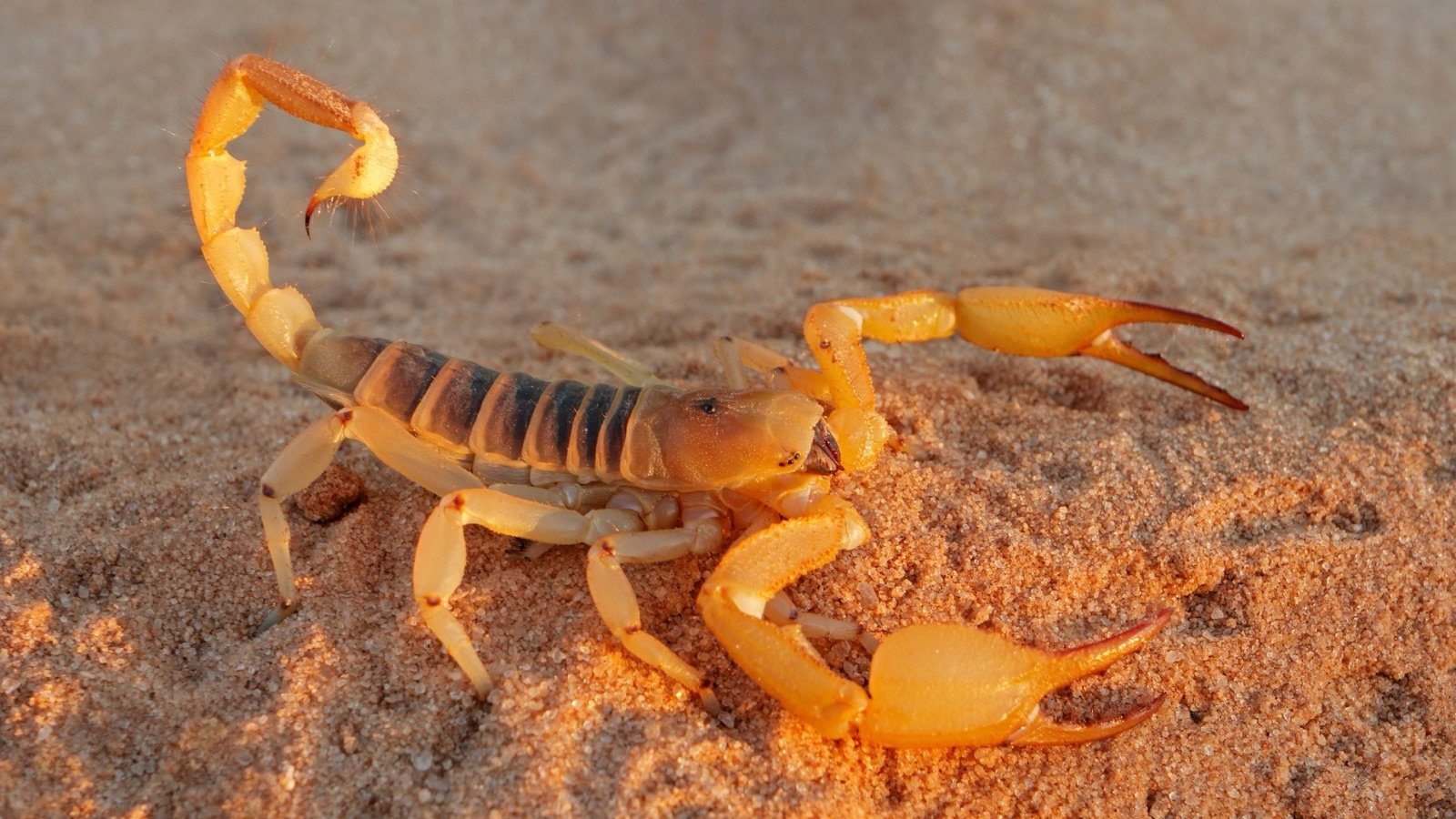
A scorpion is an arachnid, in the same broad group as spiders and ticks. It has eight walking legs, a pair of front pincers (pedipalps), and a segmented tail that curls over the back and ends in a bulb-shaped stinger.1 Despite having several eyes, scorpions see poorly and rely on fine sensory hairs and comb-like organs called pectines on their underside to feel their way and detect prey.1
The marks that identify the striped bark scorpion
Four features together make it unmistakable:
- Two dark stripes running lengthwise down the back.12
- A dark triangle on the top of the head.12
- Slender pincers and a long, slim tail, not thick, crab-like claws.2
- Pale yellow to tan color, though older individuals darken and the stripes can fade.12
For the full picture, see the striped bark scorpion profile.
Where to go next
Striped bark scorpion
The full species profile: size, color, behavior, and risk.
RISKIs it dangerous?
The honest, sourced answer to the question everyone asks first.
COMPAREvs the Arizona bark scorpion
How to tell it from the one scorpion that is genuinely dangerous.
LOOK-ALIKESNot a scorpion
Vinegaroons, wind scorpions, and pseudoscorpions, all harmless.
Sources
- Missouri Department of Conservation. “Striped Bark Scorpion,” MDC Field Guide. mdc.mo.gov. Accessed 2026-07-20.Backs: scorpion anatomy and pectines, the two stripes and head triangle, pale-to-dark color change.
- Texas A&M AgriLife, Field Guide to Common Texas Insects. “Striped Bark Scorpion (Centruroides vittatus).” texasinsects.tamu.edu. Accessed 2026-07-20.Backs: slender pincers and long tail, the stripes and head triangle as identifying marks.