Vinegaroons, wind scorpions, and pseudoscorpions all get mistaken for scorpions. None of them has a venomous stinging tail, and none is a danger to you.
Vinegaroon (whip scorpion)
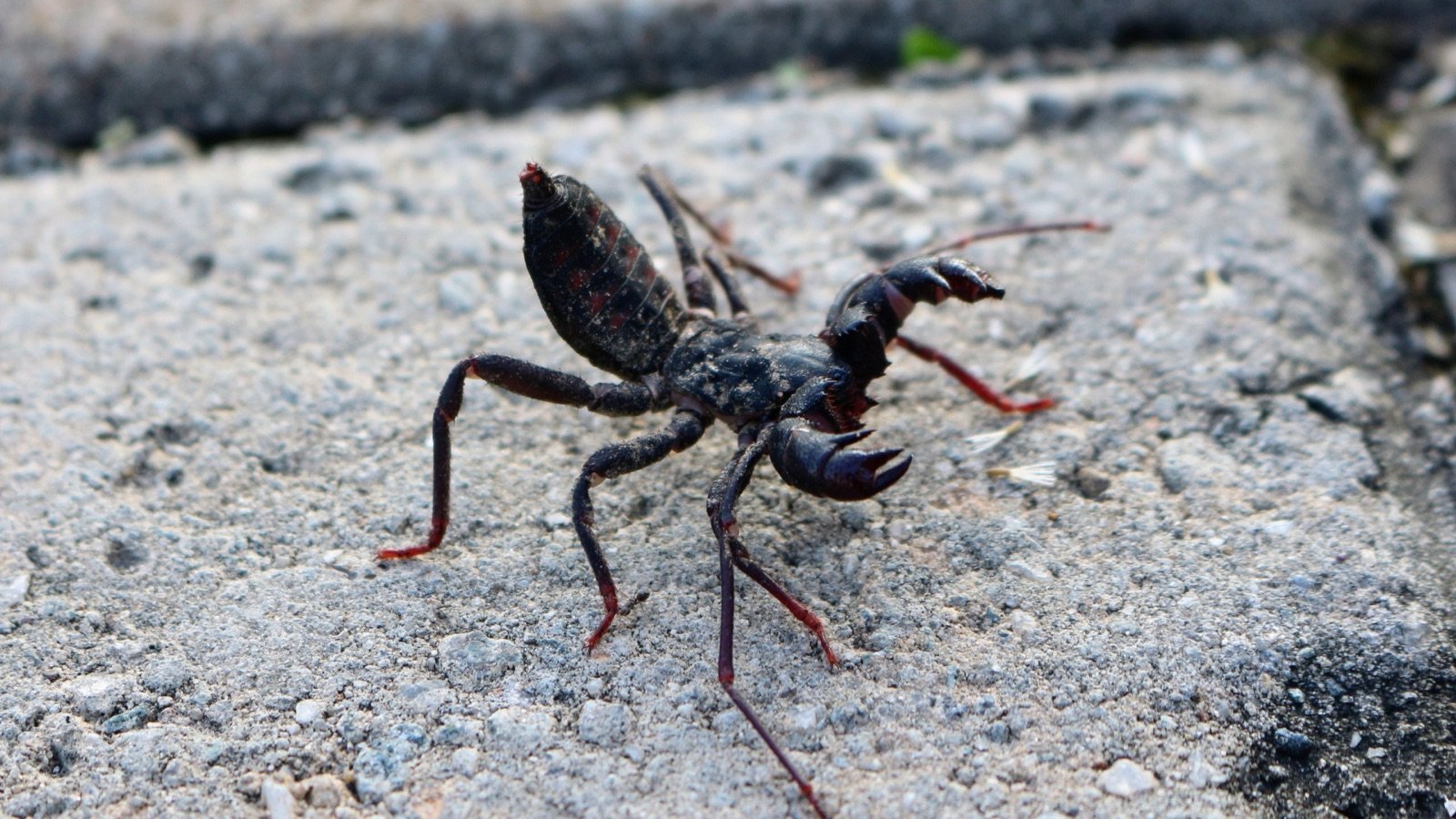
A vinegaroon (Mastigoproctus giganteus) is a large, nearly black arachnid, about 1.5 to 3 inches long, with pincer-like front appendages and a long, thin, whip-like tail.1 That whip is the giveaway: it is not a stinger. Vinegaroons have no venomous sting. They can pinch, and they can spray a fine mist that is about 85 percent acetic acid, the acid in vinegar, which is where the name comes from.1 In Texas they are found mainly in the west and the Trans-Pecos.1
Wind scorpion (camel spider, sun spider)
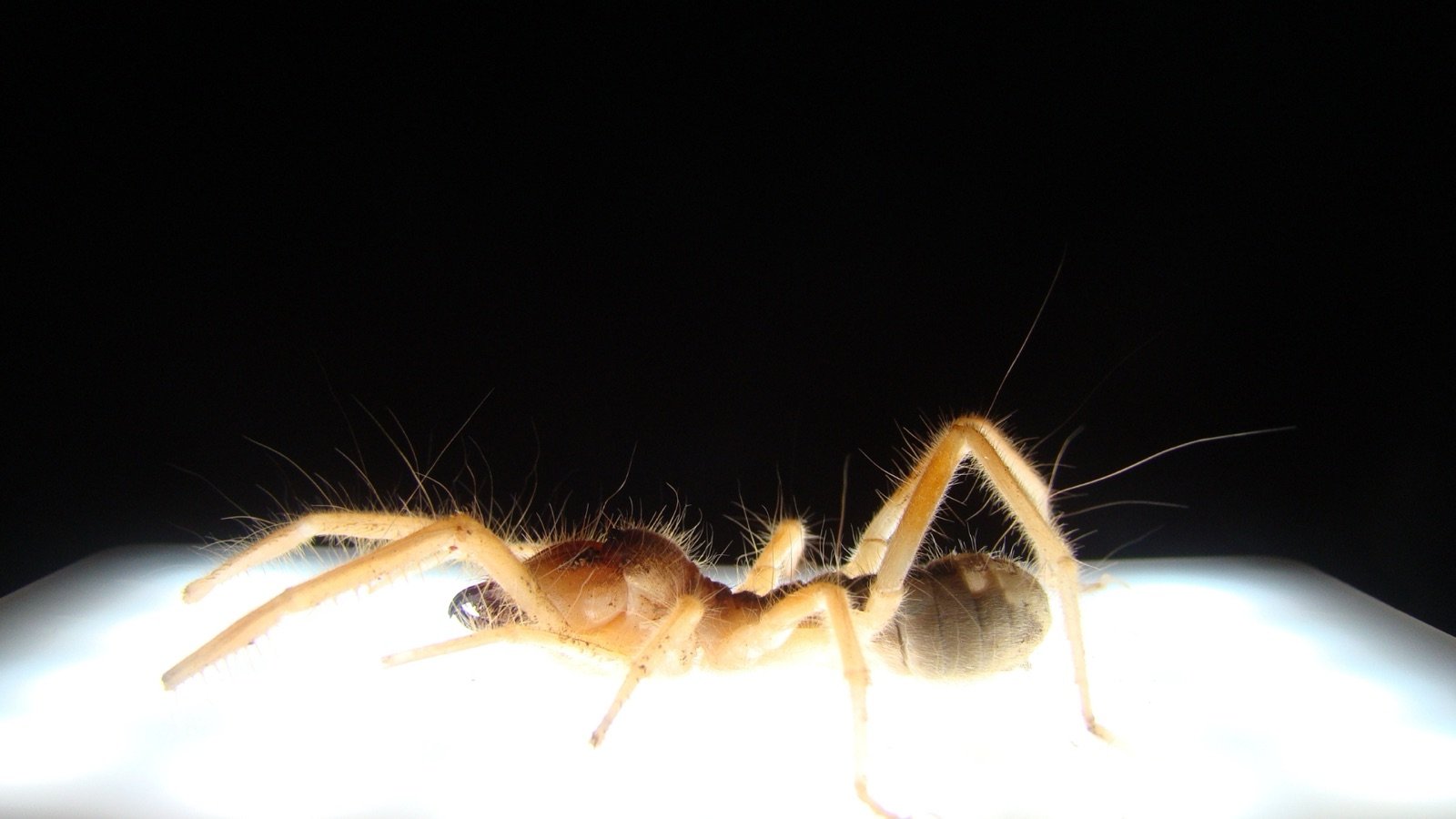
Wind scorpions (order Solifugae) are about three-quarters of an inch to 1.5 inches long, yellowish brown, with a rounded body and large, pincer-like jaws.2 They have no venom glands and no stinger, so they cannot inject any toxin.2 They may bite if handled roughly, but the bite is not serious and they cannot seriously harm people.2 They are common in arid parts of the Southwest.
Pseudoscorpion
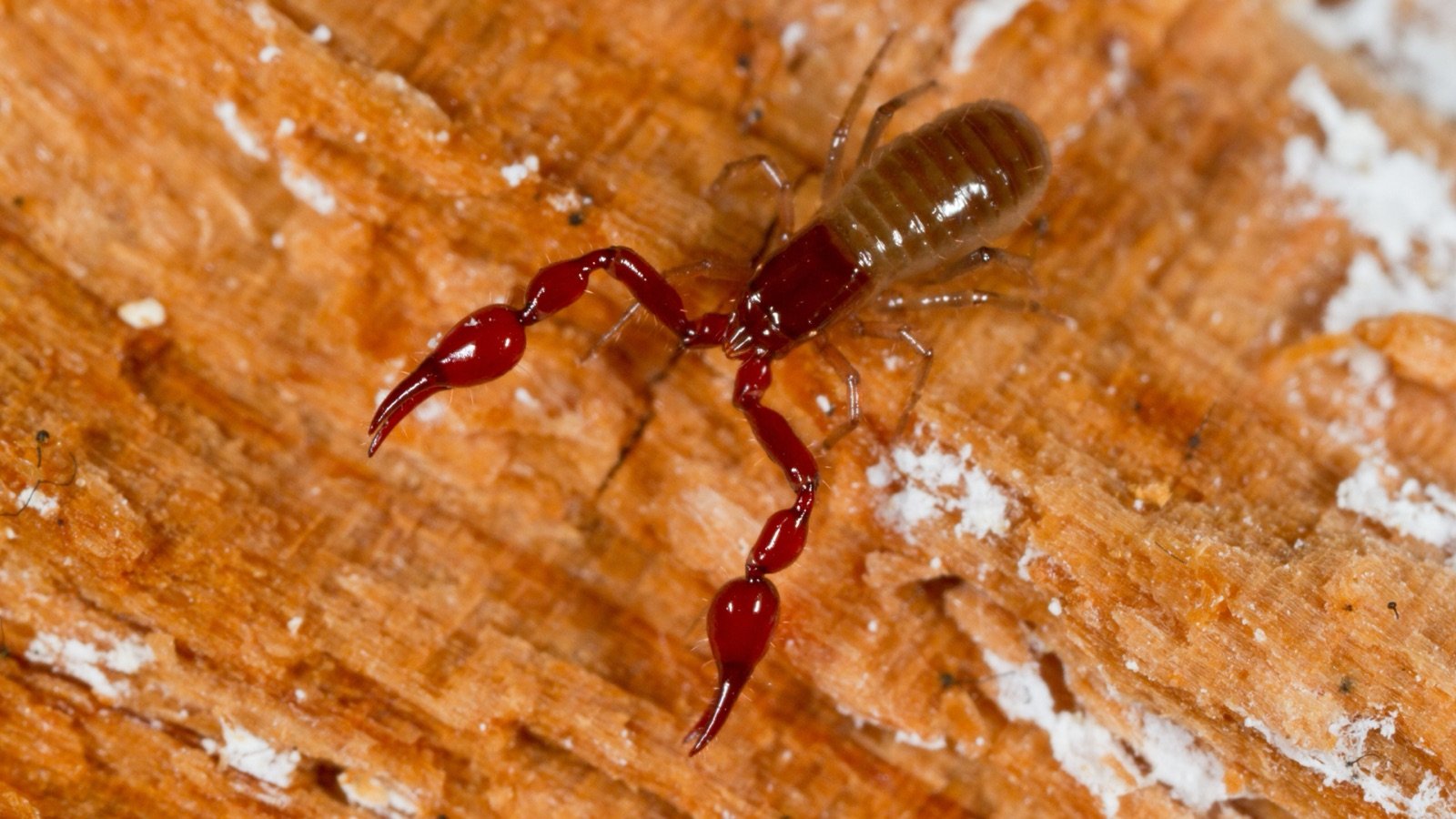
A pseudoscorpion is tiny, usually under a fifth of an inch, with a flat oval body and a pair of pincers that make it look like a miniature scorpion.3 It has no tail and no stinger, and its pincers are far too small to hurt a person or pet.3 It is harmless and even helpful, preying on tiny pests like mites, clothes-moth larvae, and booklice.3 They live under bark, leaf litter, and mulch, and sometimes wander indoors.
The quick tell
A true scorpion has both a pair of pincers and a segmented tail that curls up and ends in a bulb-shaped venomous stinger. If the creature has a thin whip instead of a stinger, has no tail at all, or is smaller than a grain of rice, it is one of these harmless look-alikes, not a scorpion.
Sources
- Texas A&M AgriLife, Field Guide to Common Texas Insects. “Vinegaroon (Mastigoproctus giganteus).” texasinsects.tamu.edu. Accessed 2026-07-20.Backs: vinegaroon size and color, whip tail, no sting, 85 percent acetic acid spray, West Texas range.
- University of California Statewide IPM Program. “Windscorpion.” ipm.ucanr.edu. Accessed 2026-07-20.Backs: wind scorpion size and color, large jaws, no venom glands or stinger, non-serious bite.
- Iowa State University Extension and Outreach. “Pseudoscorpion,” Yard and Garden. yardandgarden.extension.iastate.edu. Accessed 2026-07-20.Backs: pseudoscorpion small size, pincers, no tail or stinger, harmless and beneficial, habitat.