Why it works
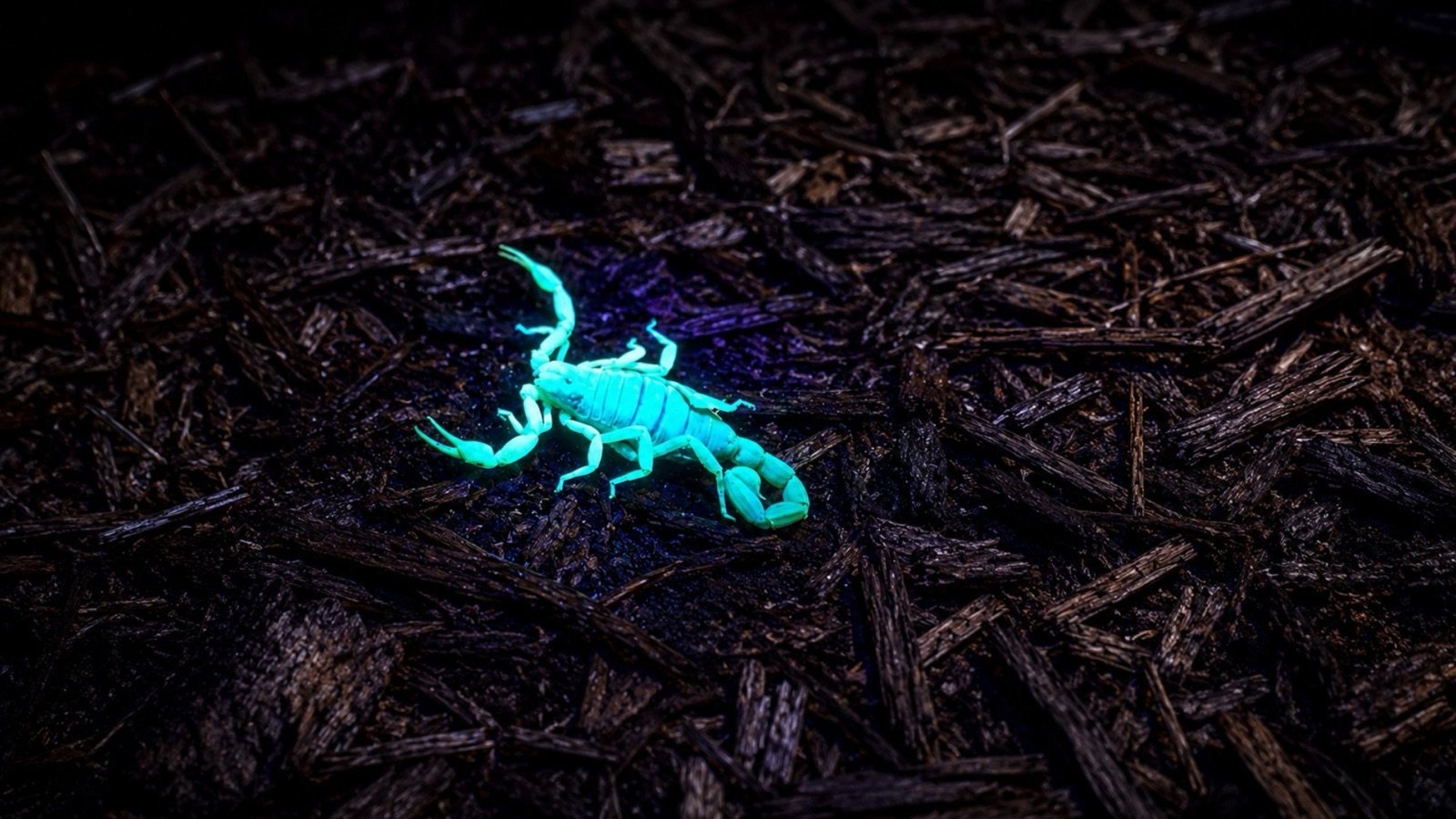
Scorpions are among the few animals whose bodies fluoresce under UV blacklight, glowing a bright green or blue.12 Against a dark yard or wall at night, a glowing scorpion is far easier to spot than it would be in daylight, which is why extension programs use blacklight scouting to map where scorpions are densest.1 The biology behind the glow is on the why they glow page.
How to use one
- Inspect at night, systematically, with the blacklight; daytime inspections are inefficient because the glow needs darkness.14
- The University of Arizona suggests UV collections several times over the summer months, roughly between 8 and 11 pm.3
- Repeating the sweep matters: several collections over a summer can greatly decrease a local scorpion population.2
- When you find one on a wall, you can collect it or treat that spot directly.1 Arizona suggests relocating collected scorpions rather than killing them.3
Sources
- Texas A&M AgriLife School IPM. “IPM Action Plan for Bark Scorpions.” schoolipm.tamu.edu. Accessed 2026-07-20.Backs: scorpions fluoresce under UV blacklight; night blacklight inspection finds them and maps density; treat or collect located scorpions; daytime inspection is inefficient.
- University of Arizona Community IPM. “Living with and Managing Scorpions” (Aug 18, 2022). acis.cals.arizona.edu. Accessed 2026-07-20.Backs: scorpions glow under a blacklight; several collections over a summer can greatly decrease a local population.
- University of Arizona Community IPM. “Scorpion Season is Here!” (May 16, 2025). acis.cals.arizona.edu. Accessed 2026-07-20.Backs: UV collections several times over summer, roughly 8 to 11 pm; relocate collected scorpions.
- Utah State University Extension. “Scorpions.” extension.usu.edu. Accessed 2026-07-20.Backs: conduct a systematic night inspection with a blacklight; scorpions glow green or blue.