Home / Biology
How striped bark scorpions live: life cycle and lifespan
Live birth, the young on the mother’s back, molting, and a surprisingly long life
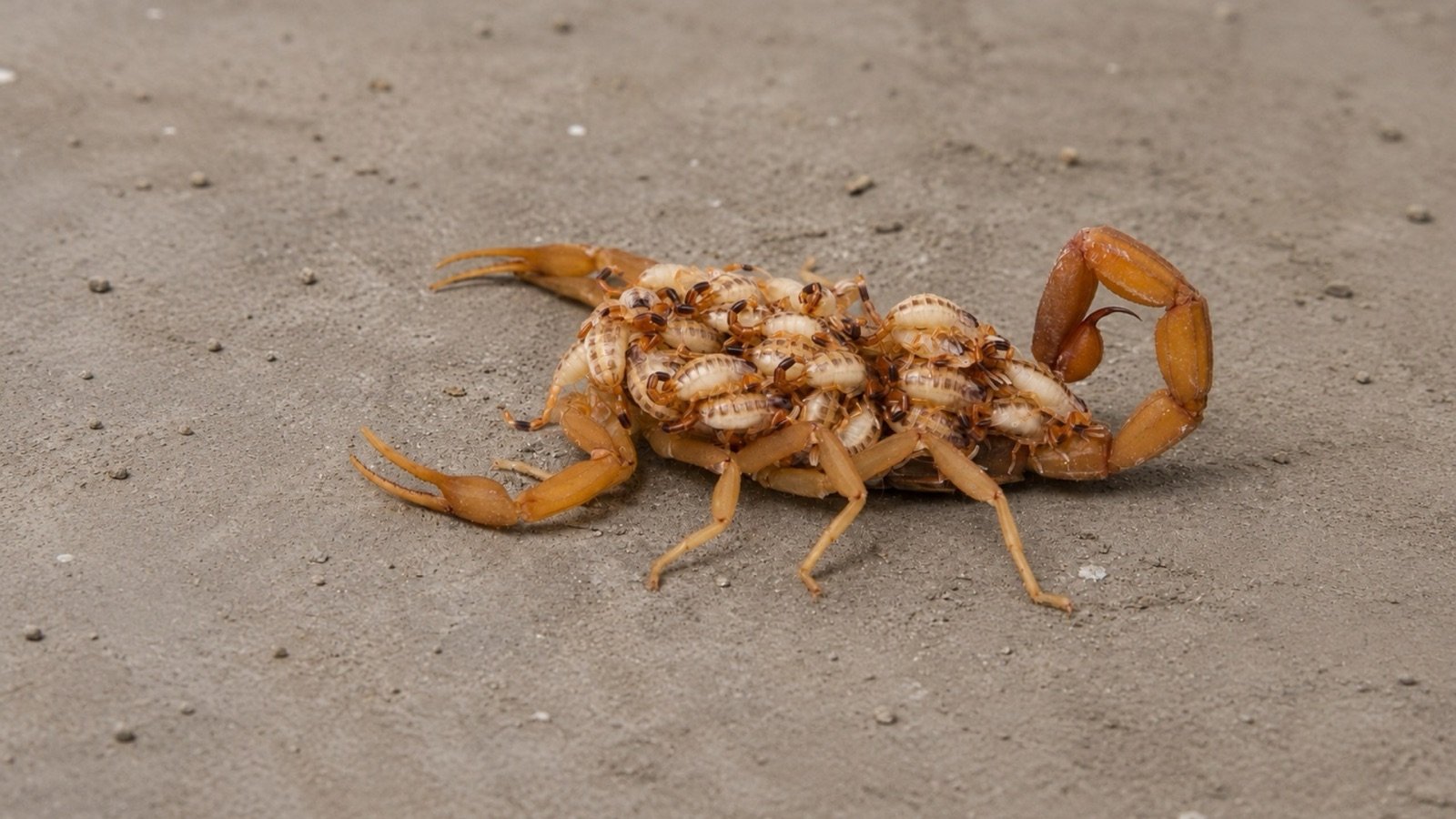
Live birth and the ride on mother’s back
Unlike most of the small creatures people meet around the house, scorpions are viviparous: they bear live young rather than laying eggs.1 After birth, the young climb onto the mother’s back and ride there. Soon they molt for the first time, and after that first molt they disperse to live on their own.2
Gestation is estimated at about eight months.2 Reported litter sizes vary by source: Texas A&M gives 13 to 47 young, averaging about 31, while the Animal Diversity Web reports an average around 30 and occasionally more.23 An adult female may produce several broods over her life.2
Growing up by molting
Scorpions grow by molting their exoskeleton rather than by metamorphosis, so a young one already looks like a small adult. Immatures molt an average of about six times before reaching maturity.23
They are long-lived for their size. The Missouri Department of Conservation gives a general lifespan of three to seven years, with some individuals surviving 25 years or more; Texas A&M frames it as a typical three to eight years, with some scorpions reaching 20 to 25.12
Courtship
Mating is preceded by an elaborate, dancelike ritual. The pair grasp each other’s pincers and move back and forth; the male then deposits a packet of sperm on the ground and maneuvers the female over it.13
Sources
- Missouri Department of Conservation. “Striped Bark Scorpion,” MDC Field Guide. mdc.mo.gov. Accessed 2026-07-20.Backs: live birth; general lifespan three to seven years, some 25 or more; dancelike courtship.
- Texas A&M AgriLife, Field Guide to Common Texas Insects. “Striped Bark Scorpion.” texasinsects.tamu.edu. Accessed 2026-07-20.Backs: young ride the mother’s back then molt and disperse; gestation about eight months; litters of 13 to 47 averaging about 31; about six molts to maturity; lifespan typically three to eight years, some 20 to 25.
- Animal Diversity Web, University of Michigan Museum of Zoology. “Centruroides vittatus.” animaldiversity.org. Accessed 2026-07-20.Backs: average brood around 30; about six molts to maturity; courtship ritual; several broods over a lifetime.