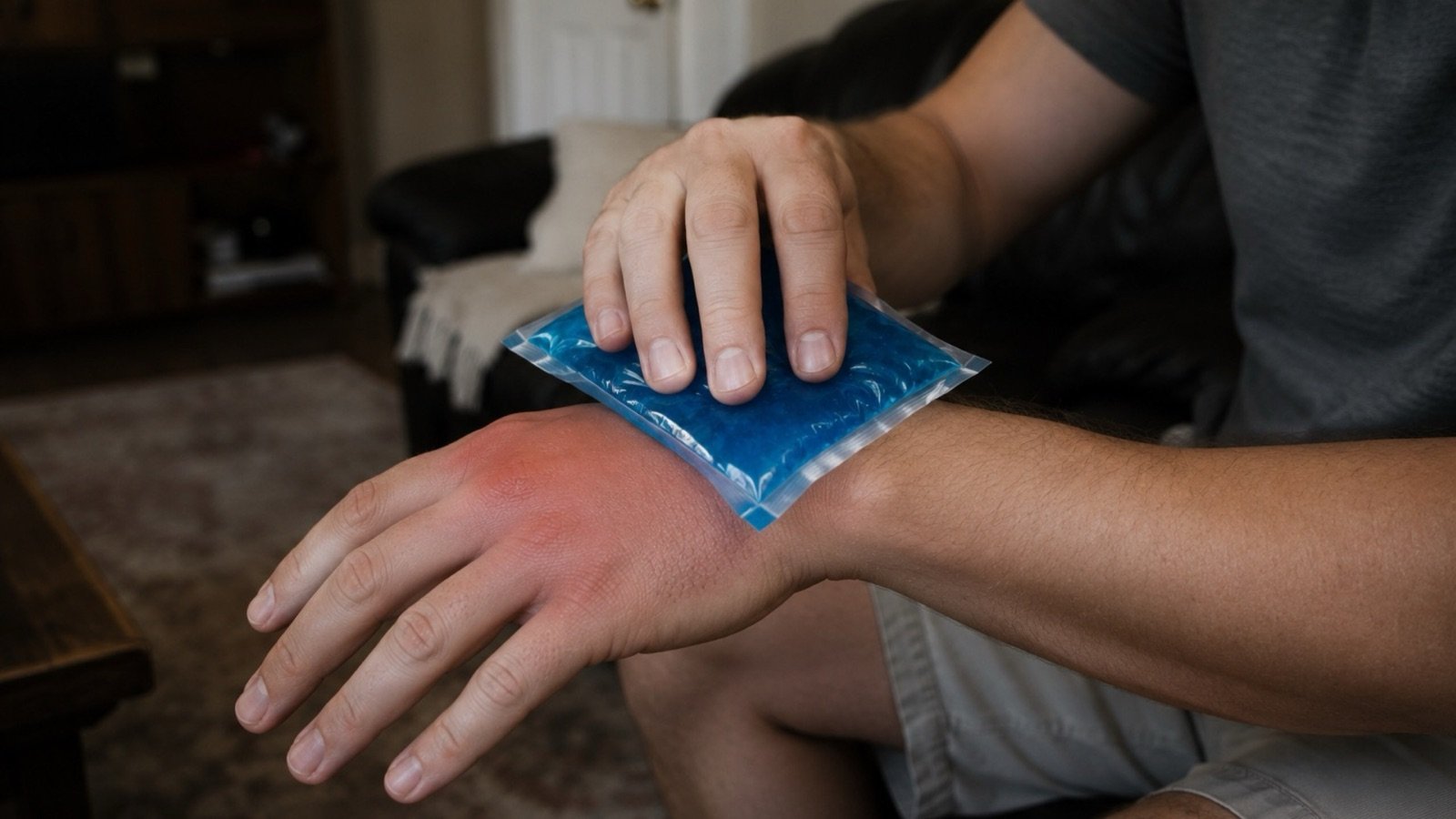
For a typical sting: wash it, put a cool compress on it, take an over-the-counter pain reliever if appropriate, and keep an eye on it for a few hours. In the US you can call Poison Control any time at 1-800-222-1222 for free, confidential guidance.1
The steps
- Clean the area. Wash the sting with soap and water.1
- Cool it. Apply a cool compress or ice wrapped in a cloth. A common approach is 10 minutes on, then 10 minutes off, repeated.1
- Ease the pain. An over-the-counter pain reliever such as acetaminophen or ibuprofen can help with mild pain.23
- Keep it still and loosen tight items. Keep the affected area still, and remove tight jewelry or clothing near the sting in case of swelling.1
- Check your tetanus status. Routine sting care includes making sure tetanus vaccination is up to date.2
- Watch for a few hours. Serious symptoms, when they happen at all, tend to appear within a few hours, so keep an eye on the person during that window.2
What not to do
Do not automatically treat a scorpion sting as an allergic reaction. University of Arizona clinicians specifically caution against reflexively taking diphenhydramine (Benadryl) for the ordinary nerve-related symptoms of a sting, because antihistamines and epinephrine are meant for a true allergic reaction, not for the venom’s normal effects.4 If there are real signs of an allergic reaction, that is different, and it is covered on the allergic-reaction page.
When you are unsure about a medication, a symptom, or a child, call Poison Control at 1-800-222-1222. It is free, staffed by experts, and available around the clock.1
Sources
- MedlinePlus Medical Encyclopedia, US National Library of Medicine. “Scorpions” (article 002850). medlineplus.gov. Accessed 2026-07-20.Backs: clean with soap and water, apply ice 10 minutes on and off, keep the area still and loosen tight clothing or jewelry, call Poison Control 1-800-222-1222.
- Shamoon Z, Rerolle S, Nelson JA, et al. “Scorpion Toxicity.” StatPearls, NIH/NCBI Bookshelf. ncbi.nlm.nih.gov. Accessed 2026-07-20.Backs: supportive care includes cleaning the wound, ibuprofen, and tetanus prophylaxis, with observation for symptom onset (about four hours).
- University of Arizona Health Sciences. “What You Need to Know About Scorpion Stings.” healthsciences.arizona.edu. Accessed 2026-07-20.Backs: acetaminophen or ibuprofen and ice for a mild sting; do not treat a sting as an allergic reaction or reflexively take diphenhydramine.
- University of Arizona Health Sciences. “What You Need to Know About Scorpion Stings.” healthsciences.arizona.edu. Accessed 2026-07-20.Backs: antihistamines and epinephrine are for a true allergic reaction, not the venom’s ordinary nerve symptoms.