Outdoors
Their flat bodies let them slip into small cracks and under objects. Look under stones, boards, loose bark on trees and logs, and in piles of wood, brush, and debris.23 During the day they rest under this surface cover and emerge after sunset to hunt.4 They do not burrow, so they depend on existing cover.3 They also climb trees and walls at night.4
Indoors
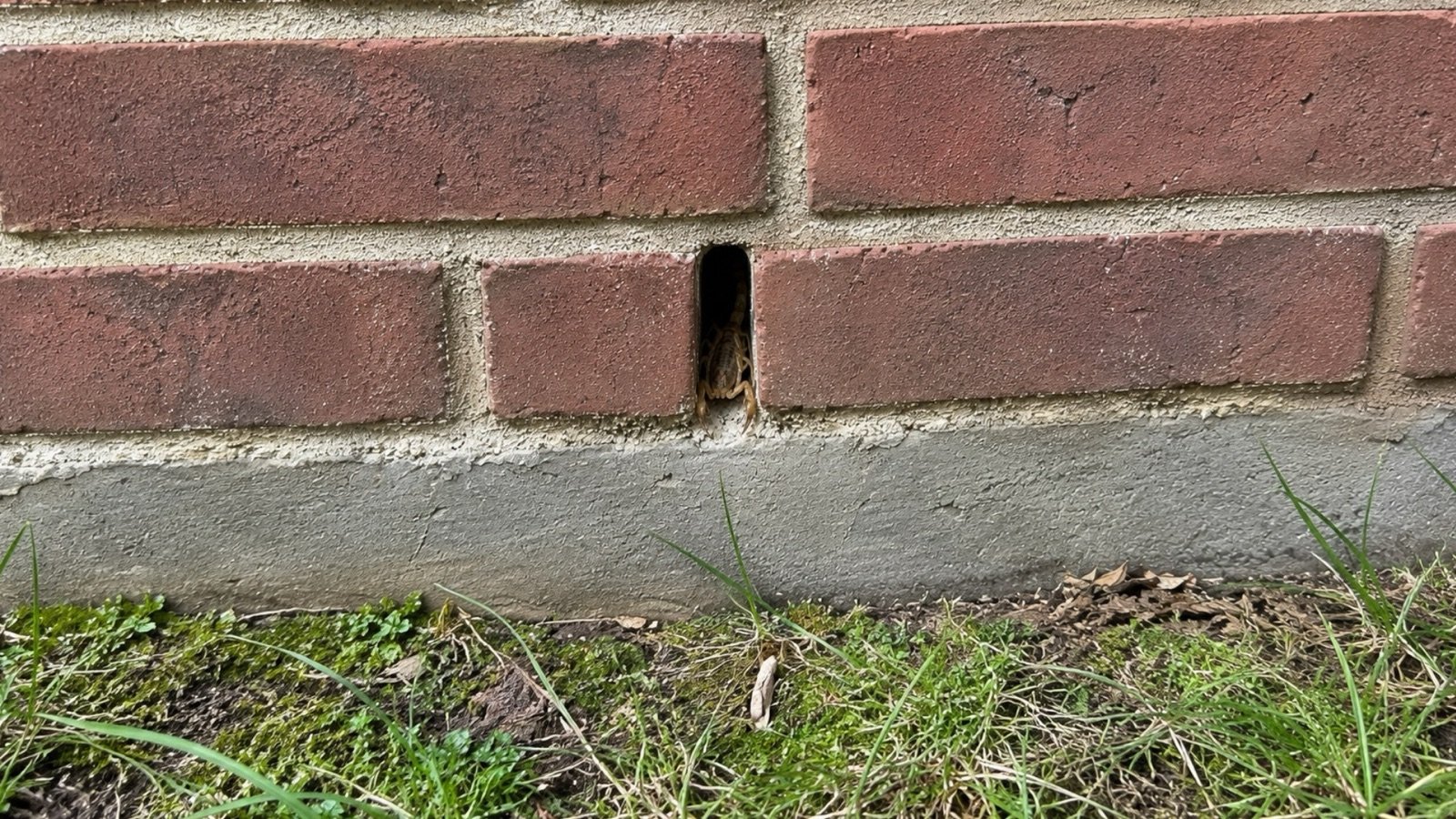
Inside a home, the University of Missouri Extension reports they are most often found in crawl spaces and attics.1 Because they climb, and because attics get hot, they may move down into living areas during heat.2 The structural spots to inspect and seal are weep holes in brick or stone veneer, roof eaves, and gaps around doors, windows, and pipes.21
Name aside, Missouri notes this “bark scorpion” does not usually live on trees or bark, even though it climbs well.5 The exclusion page turns this hiding-spot list into a sealing checklist.
Sources
- Houseman RM. “Scorpions” (G7364). University of Missouri Extension. extension.missouri.edu. Accessed 2026-07-20.Backs: indoors most often in crawl spaces and attics; structural entry via cracks around doors, windows, weep holes, and attics.
- Brown, Wizzie. “Scorpions” (E-362). Texas A&M AgriLife Extension. agrilifeextension.tamu.edu. Accessed 2026-07-20.Backs: flat body hides in cracks and under objects; under rocks, boards, bark, and debris; climbs trees and walls; attics then living areas in heat; weep holes and eaves as entry.
- Houseman RM. “Scorpions” (G7364). University of Missouri Extension. extension.missouri.edu. Accessed 2026-07-20.Backs: shelters under boards, stones, and loose bark on trees and logs.
- University of Arkansas Arthropod Museum. “Scorpion (Centruroides vittatus).” arthropod.uark.edu. Accessed 2026-07-20.Backs: rests under bark, rocks, logs, and debris by day and emerges after sunset; climbs trees and plants at night.
- Missouri Department of Conservation. “Striped Bark Scorpion,” MDC Field Guide. mdc.mo.gov. Accessed 2026-07-20.Backs: despite its name, it does not usually live on trees or bark.